- Blog
- How to Import a Used Car to Kosovo
How to Import a Car to Kosovo
Thinking about importing used cars to Kosovo? Discover which cars you can bring in (10 years, Euro 4), what documents you need, and what taxes you can expect.
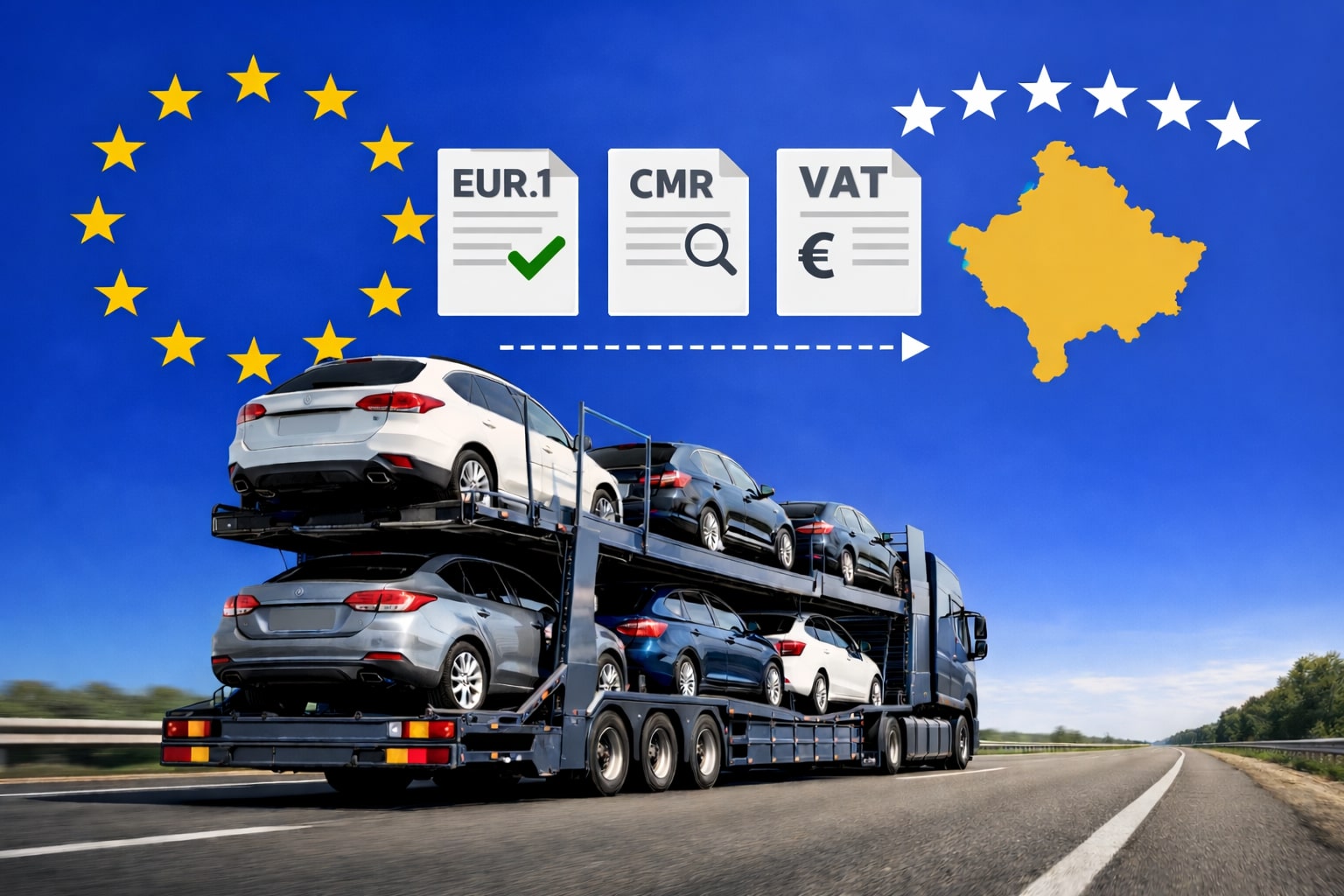
If you’re running a used car dealership in Kosovo, you’d probably like to know how to import used cars from Europe.
After all, used cars make up the majority of the car market here, and most dealers import vehicles from EU countries because they sell fast.
To help you import cars with ease, we’ll show you what cars you can import, the documents you’ll need, and the main costs to expect when bringing a used car into Kosovo.
Import regulations of Kosovo
Before you start importing, it’s crucial to know which cars can legally enter the country.
According to the Law on Vehicles, Kosovo only permits the import of cars that are no older than 10 years and that meet at least the Euro 4 emission standard.
These two rules define what you can safely bid on in EU auctions, so that there are no problems during import.
Documentation for importing a vehicle to Kosovo as a business
Preparing the required documents for import to Kosovo in advance helps you get your cars through the border faster.
Here’s the list of documents you’ll need.
► Vehicle purchase invoice
This document proves that you’ve bought the car and it’s legally yours.
A vehicle purchase invoice contains information about the seller, buyer, vehicle, price, and date of purchase.
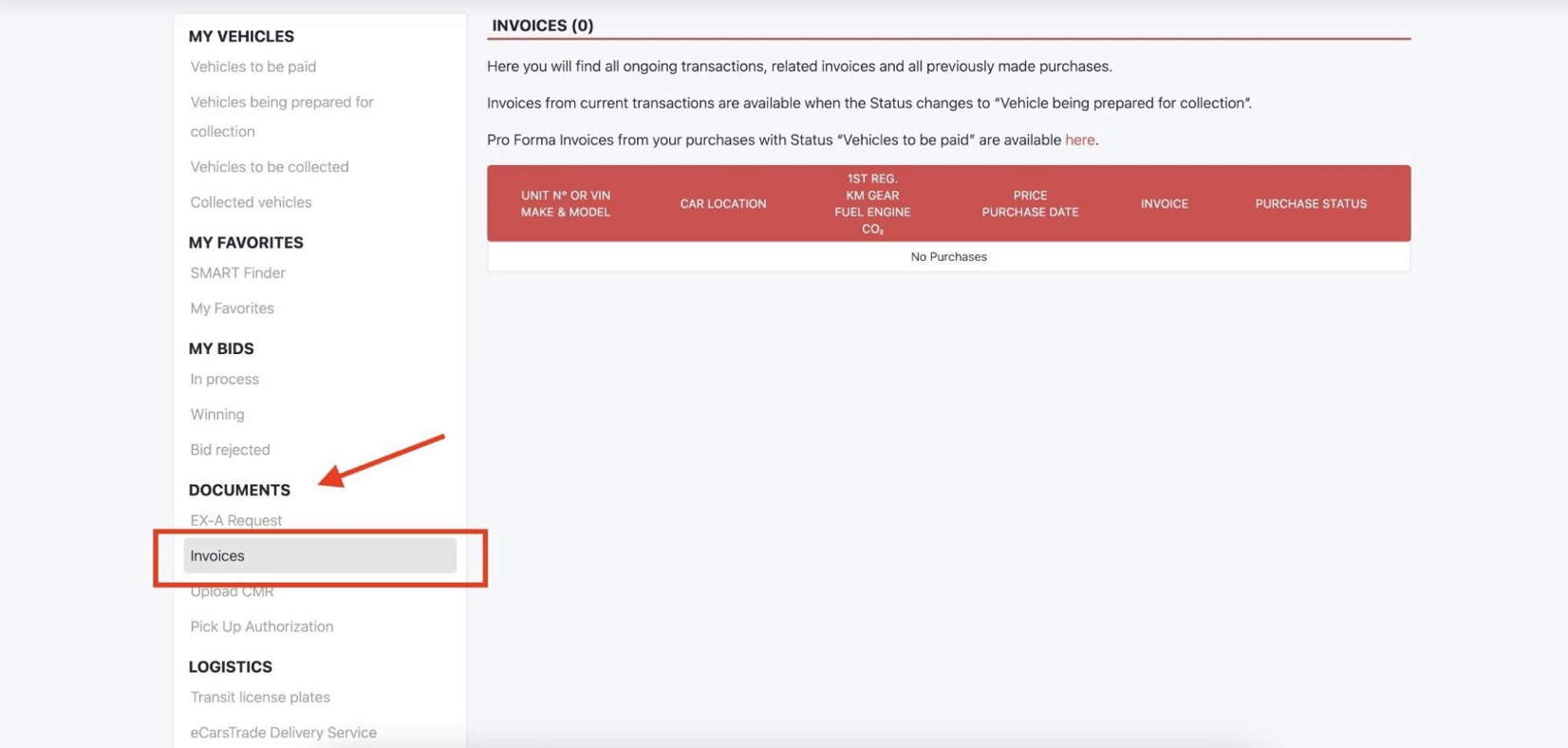
If you’re buying through eCarsTrade, you’ll be able to access your invoice on your Personal Page.
► Original registration papers
Every car sold on eCarsTrade comes with its original registration papers, which you’ll need for customs clearance.
► COC for new vehicles
For most used cars, you won’t need a Certificate of Conformity (COC). However, if you’re importing a new car, you’ll need to present a COC.
Under EU rules, a car is considered new if it has less than 6,000 km or has been registered for less than six months.
If you buy such a car in the EU and import it to Kosovo, it will be treated as a new car, so you should make sure you get a COC.
Older cars with more kilometers count as used, so a COC usually isn’t needed.
► EUR1 certificate
The EUR1 certificate proves the car’s origin. Also, it can give you access to reduced or 0% customs duty because of trade agreements between the EU and Kosovo.
While this document isn’t necessary for import, it can help you pay less customs duty.
Without an EUR1, you can still bring the car into Kosovo, but you’ll usually pay the full import duty because the car doesn’t qualify for preferential treatment.
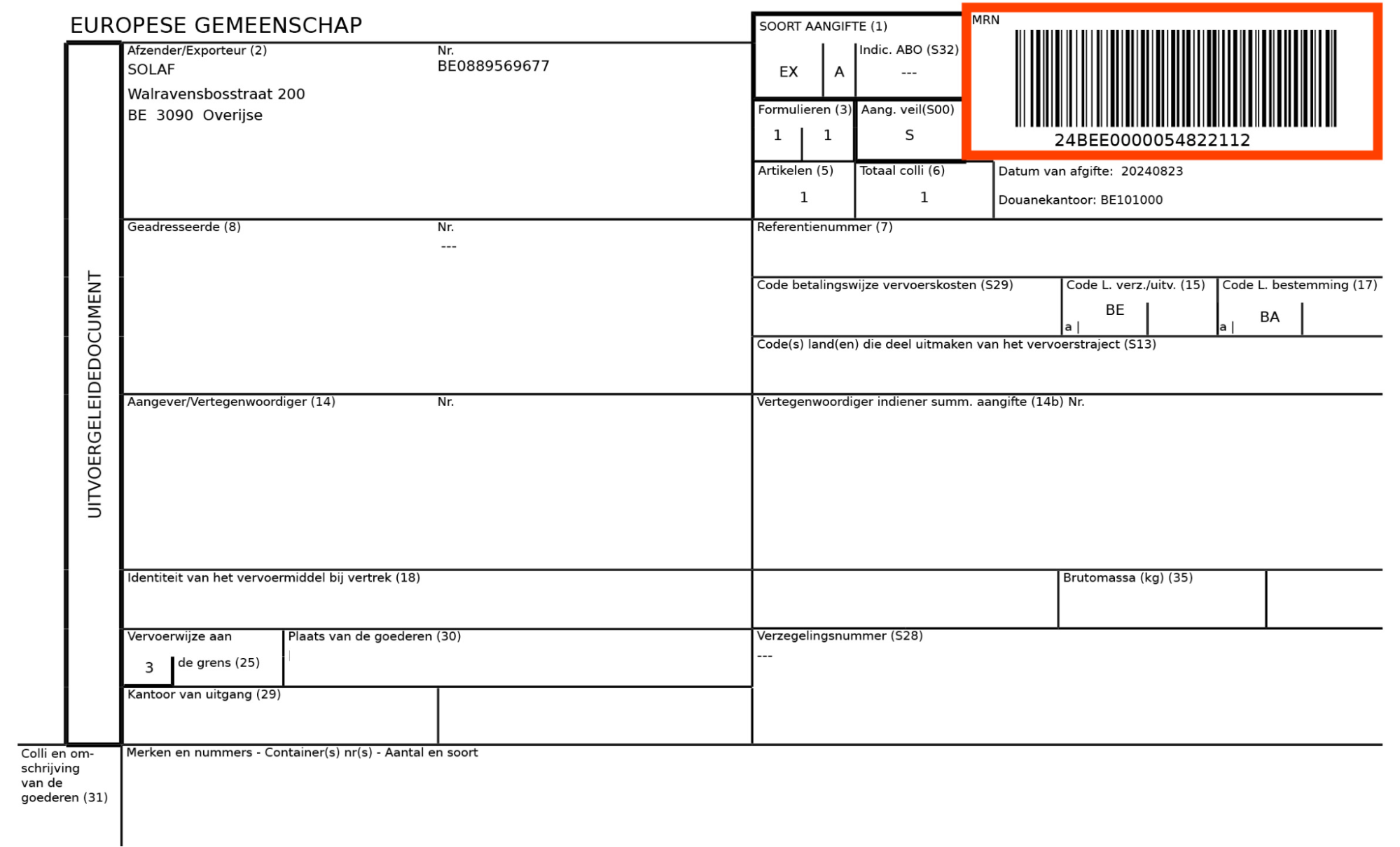
► EX-A export declaration
The EX-A is the EU export declaration that confirms the vehicle is leaving the EU.
You’ll need it when the car exits the EU and later as proof when calculating and paying import duties and taxes in Kosovo.
Taxes when importing a car to Kosovo
When you import a car to Kosovo, you’ll usually pay three main charges at the border. Here’s what they are.
Customs duty
The first tax you’ll encounter is customs duty. Standard customs duty on imported goods is 10% of the customs value (purchase price + transport + insurance).
If you have the EUR1 certificate, and if the car qualifies as EU-origin, customs duty can be reduced or not charged at all.
Excise tax
For imported cars, you’ll also have to pay the excise tax.
This tax increases with a bigger engine size and vehicle age, and diesel cars pay a higher excise tax than gasoline cars.
VAT
When importing cars to Kosovo, the VAT you’ll pay depends on whether the car was sold under the standard VAT scheme or the margin scheme in the EU.
If you buy a car from the EU under the standard VAT scheme and invoiced net (without VAT / VAT deductible), you’ll pay the standard 18% Kosovan VAT.
VAT-registered businesses can usually deduct that import VAT in their VAT return.
If you buy a car under the margin scheme, you can’t reclaim the EU VAT. When the car arrives in Kosovo, you still pay 18% import VAT on the customs value.
If you import cars from outside the EU, you also pay 18% VAT in Kosovo on the customs value, no matter how the car was sold abroad.
In short, for most imports, expect to pay 18% VAT on the customs value in Kosovo, and then check whether you can reclaim it in your VAT return.
Step-by-step process - from purchasing a car to importing it to Kosovo
Now that you know the theory, are you ready to start importing? You’ll now see the list of steps you need to take to bring a used car from the EU to Kosovo.
1. Research and buy the car
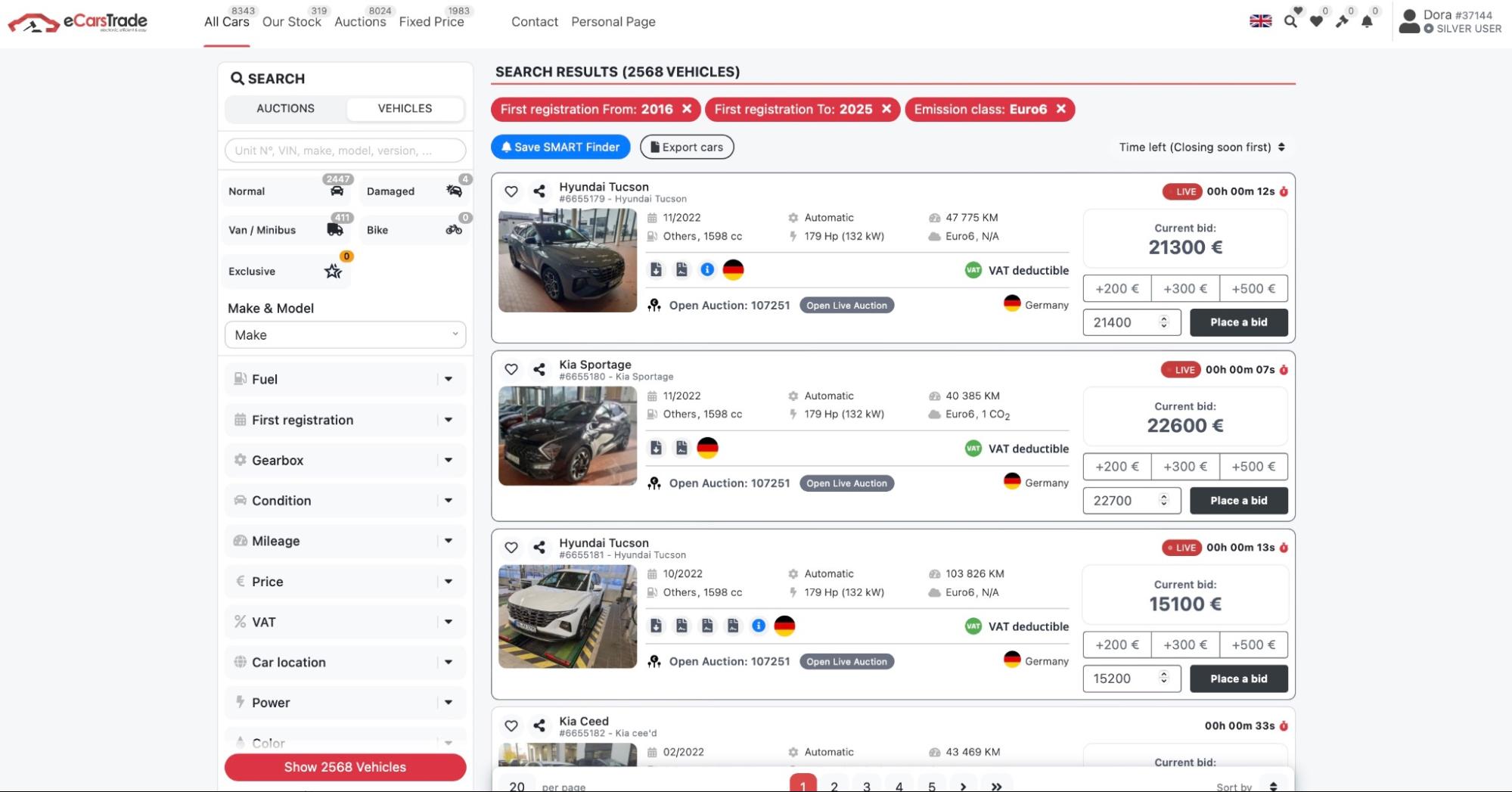
Knowing the import regulations, you should start by looking for cars that are less than 10 years old and that meet at least the Euro 4 standard.
Filters on eCarsTrade allow you to limit your search to match these requirements, so you can browse only the cars that are eligible for import.
After you place a bid and win your car at an auction, you’ll make your payment, and then you’ll receive the car purchase invoice.
With that, you’ve received the first document you’ll need for import.
2. Arrange transportation
Next, you should arrange how you’ll transport the car from the seller’s country to Kosovo.
You can choose between hiring a transport company and driving the car yourself.
If you choose to drive the car yourself, remember to get the transit plates and insurance that cover the whole route to Kosovo.
With the eCarsTrade Delivery Service, we are able to deliver to everywhere in the EU and sometimes also to non-EU countries, so feel free to contact us for a custom delivery quote.
3. Obtain a EUR1 certificate
If you’ve bought the car from an EU country, you can try to obtain the EUR1 certificate to qualify for reduced or even 0% customs duty.
Obtaining a EUR1 certificate can be tricky, so try to contact a transit agency in the country of the seller or a specialized import agency to help you with this process.
Sometimes a Certificate of Origin (COO) can be enough to qualify for reduced customs duty instead of the EUR1 certificate.
A COO can be obtained through the car brand itself or you can try asking your seller for any additional information.
4. Request the EX-A export declaration
Next, your seller should file the EX-A export declaration.
You’ll need this document to confirm that the car has left the EU, and to get your VAT refund.
On eCarsTrade, you can request the EX-A declaration directly within the platform.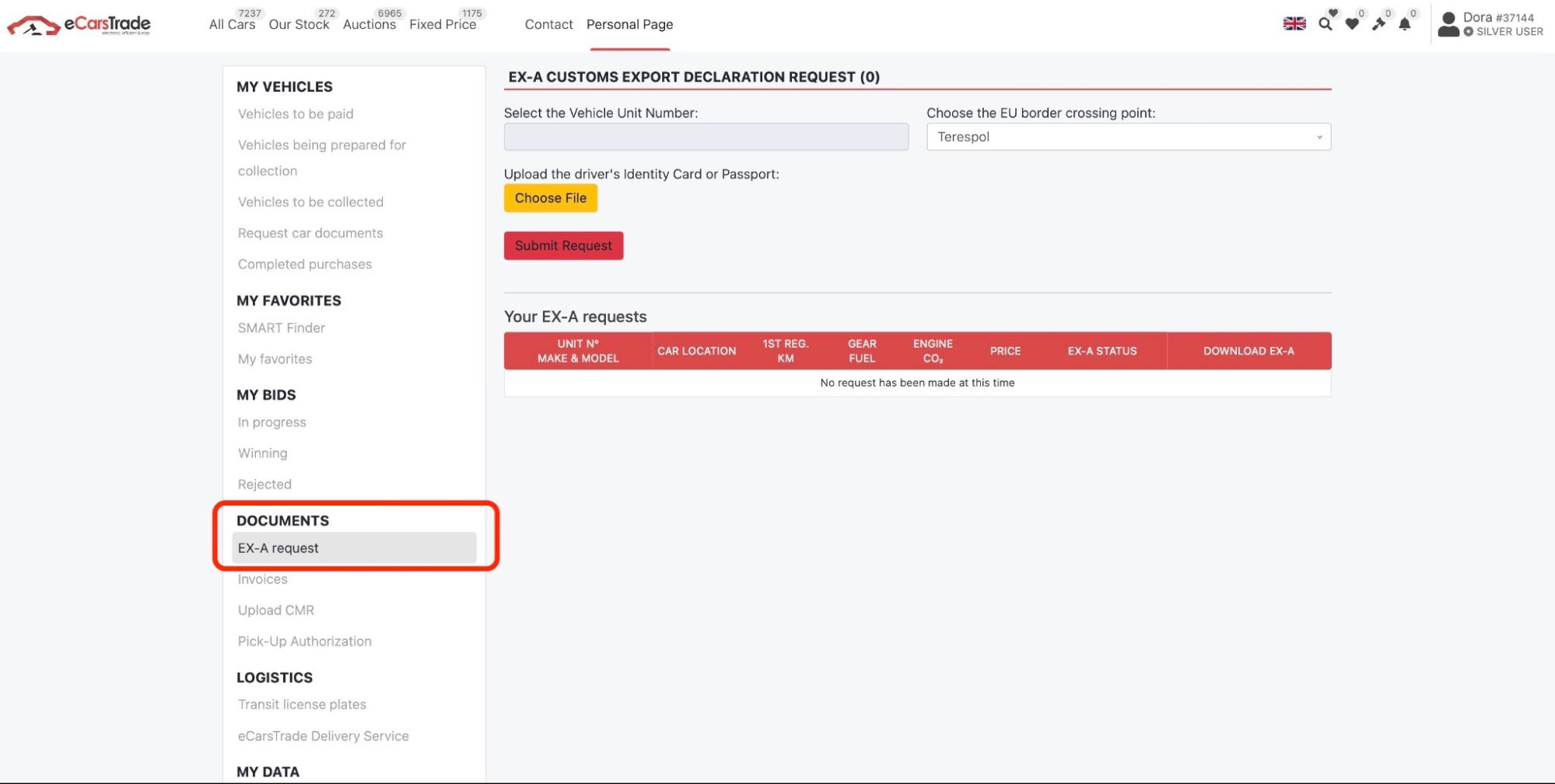
5. Follow the export status to claim your VAT refund
As a non-EU buyer, you paid a deposit to the seller that’s equal to the VAT in their country.
Let’s say that you’ve bought a car from a German seller. In that case, you paid an extra 19% on top of the car’s price.
After the vehicle leaves the EU, you can track the export status on the MRN Follow-up website using the MRN number shown on your EX-A document.
Once customs confirms the export, the VAT will be refunded to the same account used for the purchase.
6. Go through the Kosovan customs
When the car arrives in Kosovo, you’ll present the following documents to customs:
- Vehicle purchase invoice
- Original registration papers
- COC (for new vehicles)
- EUR1 certificate
- EX-A export declaration
There, customs officers will check that the car meets the 10-year age limit and Euro 4 standard and confirm the car’s customs value.
7. Pay the import taxes
Based on the customs value of the car, you’ll pay:
- Customs duty (which can be reduced with EUR1)
- Excise duty
- VAT
8. Register the car
After clearing customs, your final step is to register the car in Kosovo.
You’ll take the vehicle to a licensed inspection centre, arrange local insurance, and then go to the registration office to get your Kosovan licence plates and registration certificate.
Get to know the Kosovan used car market
In 2022, around 85% of all imported cars were used vehicles. Based on such a large share of used vehicles on the market, we can see that there’s demand for maintained second-hand cars coming from the EU.
The trend has continued in recent years. For example, from January to April 2024, Kosovo imported 9,066 used cars and only 951 new ones, so used vehicles still make up over 80% of all imports.
As of 2025, some of the most popular models in Kosovo are:
- Dacia Sandero
- Renault Captur
- Peugeot 308
- Volkswagen Golf
So, if you focus on importing popular compact hatchbacks and crossovers from well-known European brands, you should be able to resell them quickly.
Importing a car to Kosovo - FAQ
► Can I import any used car to Kosovo?
No, you can only import cars that are no older than 10 years and that meet at least the Euro 4 emission standard.
► What taxes will I pay when importing a car to Kosovo?
At the border, you’ll pay three main charges: customs duty (unless you have an EUR1 certificate), excise duty, and VAT.
► Do I need an EUR1 certificate to import a car?
No. You can import a car without an EUR1 certificate. However, with an EUR1 (and if the car qualifies as EU-origin), customs duty can be reduced or not charged at all, so your overall import costs are lower.
► Can I import cars from outside the EU to Kosovo?
Yes, but you’ll have to follow the same import rules (no older than 10 years and at least Euro 4). Since you can’t use EUR1 for non-EU imports, you’ll have to pay the full customs duty.
eCarsTrade oferuje internetowe aukcje samochodowe samochodów poleasingowych z Europy!